
9 min read
Disclosure: As an Amazon Associate and eBay Partner Network publisher, we earn from qualifying purchases. This doesn’t affect what we recommend or how we describe it.
You’ve dialed in your grind, bought fresh beans, and now you want espresso that tastes like it came from a real Italian café—but without a countertop full of electronics or a four-figure budget. Manual lever espresso makers promise hands-on control and espresso with serious crema, but picking the right one means sorting out portability, build quality, and how much control you actually want. This guide breaks down the best manual espresso levers available right now, with clear advice on which model fits which type of home barista.
Top picks at a glance
- Flair 49 PRO Manual Lever Espresso Maker Black — the most feature-rich option
- Flair Classic Manual Lever Espresso Maker — the budget pick
- Leverpresso V4 Portable Lever Espresso Maker — the most compact choice
- La Pavoni PSC-16 Professional Stradivari Lever Espresso Machine — the premium option
How each manual lever espresso maker stands apart
Each model here brings something different to the table—literally. Some are built for compact travel, others for serious home setups. Here’s a direct comparison of the four best manual espresso levers, lined up by condition, price, and what kind of user each one suits best.
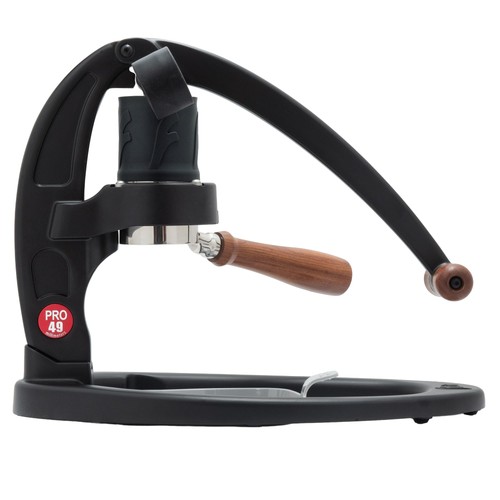
Pictured: Flair 49 PRO
Pictured: Flair 49 PRO
| Product | Condition | Price | Best For | Water Capacity (ml) | Dimensions (inches) |
|---|---|---|---|---|---|
| Flair 49 PRO Manual Lever Espresso Maker Black |
New | $$ | Feature-rich, advanced home use | 70 | 12 x 6 x 10 |
 Flair Classic Manual Lever Espresso Maker Flair Classic Manual Lever Espresso Maker |
Used | $ | Budget, entry-level | 60 | 12 x 6 x 10 |
 Leverpresso V4 Portable Lever Espresso Maker Leverpresso V4 Portable Lever Espresso Maker |
New | $ | Compact, travel-friendly | 120 | 7 x 3 x 3 |
 La Pavoni PSC-16 Professional Stradivari Lever Espresso Machine La Pavoni PSC-16 Professional Stradivari Lever Espresso Machine |
New | $$$ | Premium, traditional lever | 1000 | 16 x 10 x 12 |
Pricing key: $ marks the budget tier, $$ the mid-range, $$$ the premium picks. Tiers are relative to the products in this comparison; actual prices update live below.
Related Guides
- Our guide to AeroPress vs French Press: Which Makes Better Espresso-Style Coffee?
- Burr vs Blade Grinders for Espresso: What’s the Real Difference?
- Our guide to Espresso Machine vs Moka Pot: What’s the Real Difference?
- How to Adjust Espresso Machine Pressure: A Step-by-Step Guide
- How to Backflush an Espresso Machine: A Step-by-Step Guide
- Our guide to How to Dial In Grind Size for Espresso: A Step-by-Step Guide
- Browse all Buying Guides →
What to expect from a manual espresso lever
Manual lever espresso makers give you a direct connection to every shot you pull. You supply the pressure, control the pre-infusion, and manage the timing. Unlike electric machines, these levers don’t automate anything—there’s no pump or PID controller. That means the learning curve is steeper, but the reward is real satisfaction and a shot tailored to your taste and technique.
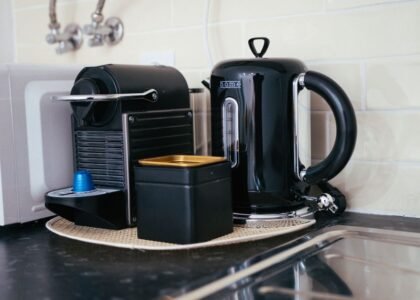
Because you’re heating water separately for most of these (except for the La Pavoni PSC-16, which has a built-in boiler), you’ll want a reliable kettle as part of your setup. Expect to spend a little more time per shot, especially when dialing in grind and tamp pressure. But for many home enthusiasts, that’s half the fun. For a deeper dive into the craft of lever espresso, the Specialty Coffee Association offers resources on espresso extraction standards and technique.
Flair 49 PRO: the most feature-rich manual lever
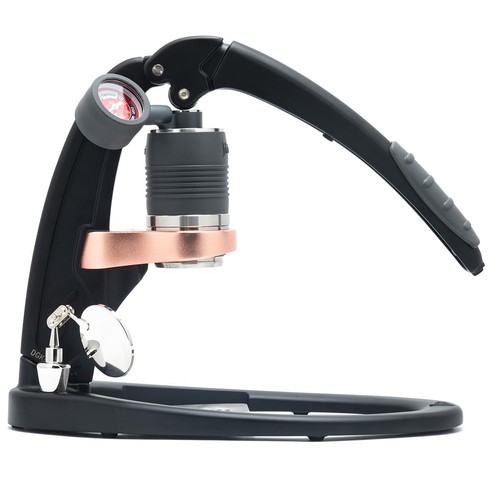
On paper, the Flair 49 PRO Manual Lever Espresso Maker Black is the most advanced option here for home use. Its 70 ml brew chamber is designed for single or double shots, and the build includes a pressure gauge for real-time feedback. The portafilter is stainless steel, and you get a wider range of grind compatibility than with simpler models. If you want to experiment with pressure profiling (manually varying pressure during extraction) and value precise feedback, the Flair 49 PRO stands out. It’s bigger and heavier than the Leverpresso V4, but still very manageable for small kitchens.
This is the right pick if you care about dialing in every variable and want results approaching prosumer machines, but without the price tag or footprint of the La Pavoni PSC-16.
Flair Classic: the affordable entry point
The Flair Classic Manual Lever Espresso Maker is a favorite among budget-minded espresso fans who want to learn lever technique without a big upfront investment. It’s usually available used, and the design is simple: a 60 ml brew chamber, lever mechanism, and no built-in pressure gauge. You’ll need a separate kettle for water heating, and you won’t get quite as much control or feedback as with the Flair 49 PRO.
Still, the Classic delivers on the fundamentals: solid build, easy cleaning, and a repeatable shot process. If you’re just getting started and want to see if lever espresso is for you, this is the lowest-risk way in. The lack of a pressure gauge means you’ll need to learn by feel, but that’s not a dealbreaker for most beginners.
Leverpresso V4: best for portability and small kitchens
The Leverpresso V4 Portable Lever Espresso Maker is the outlier on this list—designed for travel and tight spaces. At just 7 inches tall and 3 inches wide, it’s small enough to fit in a backpack or a crowded countertop. Despite the compact size, the Leverpresso V4 offers a surprisingly generous 120 ml water capacity, enough for a double shot or two singles.
It’s all manual: you heat water separately, add grounds, and use the twin levers to generate pressure. There’s no pressure gauge or advanced feedback, but the compactness and low price make this a smart choice if you want real espresso in a dorm, RV, or on the road. If size and portability are your top priorities, the Leverpresso V4 is the strongest match.
La Pavoni PSC-16: the premium, traditional lever experience
The La Pavoni PSC-16 Professional Stradivari Lever Espresso Machine is in a different league. With a 1-liter (1000 ml) boiler and a classic all-metal build, it’s designed for serious home baristas who want a traditional lever machine that’s as much a centerpiece as a tool. Unlike the other models here, the La Pavoni has its own heating element and boiler—no need for a separate kettle.
This model is heavy (over 16 inches tall and 10 inches wide), and it takes up real counter space. The learning curve is steep, and maintenance is more involved. But if you want a machine that can pull multiple shots back-to-back and looks as good as it performs, this is the premium pick. It’s best for those with a dedicated coffee space and a willingness to learn classic lever technique.
For more on the heritage and mechanics of lever machines, check out the Italian Espresso National Institute, which sets standards for traditional espresso preparation.
Common mistakes to avoid
- Ignoring water heating needs: Most manual levers (except the La Pavoni PSC-16) require a separate kettle. Forgetting this leads to frustration and inconsistent results.
- Assuming all levers are portable: The La Pavoni PSC-16 is large and heavy—buying it for travel or a small kitchen often ends in regret.
- Overlooking pressure control: Cheaper models like the Flair Classic lack a pressure gauge, making it harder to troubleshoot extraction problems if you want consistent results.
- Expecting café-style steaming: Only the La Pavoni has a built-in boiler and steam wand. If you want to steam milk for lattes, don’t expect this from the other models.
- Buying above your skill level: Premium machines like the La Pavoni PSC-16 reward patience and practice, but they’re not forgiving for beginners. Start simpler if you’re new to lever espresso.
How these lever espresso makers made the shortlist
For this guide, the focus was on manual lever espresso makers that are currently available and have a clear track record among home coffee enthusiasts. The main criteria compared were: water capacity (ranging from 60 ml for single shots up to 1000 ml for multi-shot sessions), dimensions (critical for kitchen fit or travel), presence of pressure feedback (gauge or not), required accessories (such as external kettle), and overall build quality (materials, longevity). The price tier and whether the product is new or used also played a key role, since this affects both long-term value and initial investment.
This guide is based on research into manufacturer specifications, listed features, and how each model is positioned in the home coffee market. Unbranded levers, models with incomplete specifications, and bundled kits that obscure the core machine were excluded to keep the shortlist focused on proven, standalone options.
Manual lever machines are not for everyone. If you want fast, push-button espresso or need to make milk drinks for a crowd, you’ll be better off with a semi-automatic or super-automatic machine. These levers are for those who enjoy the process as much as the result, and who aren’t afraid to tinker and learn.
Frequently asked questions about manual espresso levers
How much time does it take to pull a shot with a manual lever?
Expect the process to take 3–5 minutes per shot, including grinding, heating water, and cleanup. The actual extraction is usually around 30 seconds, but the setup and cleanup add time, especially if you’re new to manual levers.
Is the Flair 49 PRO worth the price over the Flair Classic?
The Flair 49 PRO offers a pressure gauge, larger brew head, and more robust construction compared to the Flair Classic. If you want more control and feedback for dialing in shots, the upgrade is justified. For pure budget value and learning the basics, the Classic still delivers solid espresso.
Can I steam milk with these manual lever machines?
Only the La Pavoni PSC-16 includes a built-in steam wand, thanks to its large boiler. The Flair and Leverpresso models do not have milk steaming capability, so you’ll need a separate milk frother if lattes and cappuccinos are your goal.
How portable is the Leverpresso V4 compared to the others?
The Leverpresso V4 is the most compact and travel-friendly option, measuring just 7 inches tall and 3 inches wide. It fits easily in a backpack, unlike the heavier and bulkier Flair or La Pavoni models, which are best left on the counter.
What kind of maintenance do these machines require?
The Flair and Leverpresso models are simple to clean—rinse the brew chamber and wipe down parts after each use. The La Pavoni PSC-16 is more involved, requiring regular descaling of the boiler and attention to seals and gaskets. Plan for a deeper clean every few months, especially if you have hard water.
Do I need a specific grinder for manual lever espresso makers?
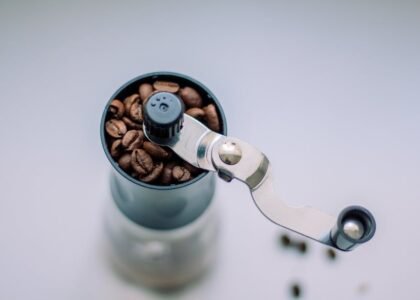
Yes, you’ll need a grinder capable of fine, consistent espresso grounds. Manual levers are sensitive to grind size—too coarse and you’ll get weak, under-extracted shots; too fine and you risk choking the machine. A burr grinder with micro-adjustments is strongly recommended for best results.
Related Guides
- Our guide to AeroPress vs French Press: Which Makes Better Espresso-Style Coffee?
- Burr vs Blade Grinders for Espresso: What’s the Real Difference?
- Our guide to Espresso Machine vs Moka Pot: What’s the Real Difference?
- How to Adjust Espresso Machine Pressure: A Step-by-Step Guide
- How to Backflush an Espresso Machine: A Step-by-Step Guide
- Our guide to How to Dial In Grind Size for Espresso: A Step-by-Step Guide
- Browse all Buying Guides →
Last updated: June 2026 · Our editorial approach