9 min read
Disclosure: As an Amazon Associate and eBay Partner Network publisher, we earn from qualifying purchases. This doesn’t affect what we recommend or how we describe it.
Dialing in espresso at home is a game of precision, and espresso shot glasses for machines are the unsung heroes for two types of coffee lovers: beginners struggling to hit that perfect 1:2 brew ratio, and enthusiasts chasing repeatable results down to the milliliter. If you’re tired of guessing your yield, dealing with messy overflows, or squinting through foggy glass, choosing the right shot glass can fix more frustrations than you might expect. Here’s a clear-eyed look at what matters, how the options stack up, and what to know before you buy—or upgrade—your espresso shot glasses for your home machine setup.
Why Home Espresso Machines Need Purpose-Built Shot Glasses
Most home espresso machines don’t ship with great shot glasses. The freebies are often too small (under 50 ml), missing measurement marks, or made from fragile glass that cracks after a few hot/cold cycles. Purpose-built espresso shot glasses solve these problems by offering accurate volume markings, higher thermal resistance, and—crucially—dimensions that fit under your brew group without splashing or crowding your scale.
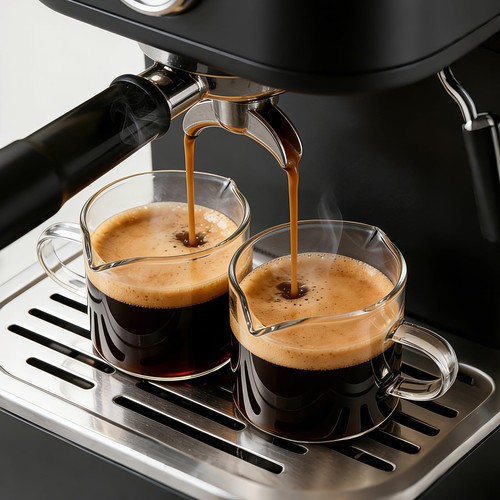
Accurate shot glasses make it easy to nail your target yield, whether you’re going for a 36-gram double or a 20-gram single. For beginners, they demystify the process by showing exactly how much liquid you’re pulling. For enthusiasts, they enable consistency and faster dialing-in with less mess. And for anyone who’s ever overflowed a demitasse onto their scale, a properly sized shot glass is a game-changer.
Espresso Shot Glasses for Machines: Side-by-Side Comparison
| Type | Capacity | Graduation Accuracy | Material | Heat Resistance | Price |
|---|---|---|---|---|---|
| The tall, single-spout option | 70 ml | ±2 ml | Borosilicate Glass | Up to 250°C | $ |
| The low-profile, double-spout pick | 60 ml | ±1 ml | Tempered Glass | Up to 180°C | $$ |
| The most durable, feature-rich choice | 100 ml | ±5 ml | Stainless Steel | Up to 300°C | $$$ |
| The budget-friendly plastic beaker | 80 ml | ±3 ml | Food-Grade Polycarbonate | Up to 135°C | $ |
Pricing context: $, $$, and $$$ are relative ratings against the other products listed above, not absolute dollar ranges. Live current prices follow below.
Pricing context: $, $$, and $$$ are relative ratings against the other products listed above, not absolute dollar ranges. Live current prices follow below.
Related Guides
- Espresso Machine vs Moka Pot: What’s the Real Difference?
- Our guide to How to Adjust Espresso Machine Pressure: A Step-by-Step Guide
- Espresso Machine Water Filters That Are Actually Worth Using
- Our guide to Espresso Machines for Home Use, Reviewed
- AeroPress vs French Press: Which Makes Better Espresso-Style Coffee?
- Our guide to Burr vs Blade Grinders for Espresso: What’s the Real Difference?
- Browse all Coffee Essentials →
What Separates a Good Espresso Shot Glass from a Frustrating One
Not all shot glasses are created equal—especially for espresso machines where clearance and accuracy matter. Here’s what to look for, based on research and manufacturer specifications:
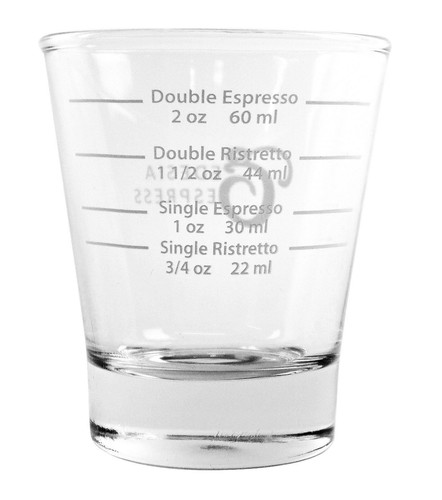
- Graduation Marks: Cheap glasses are often off by 5 ml or more. Look for glasses with laser-etched or printed marks every 5 ml, and check the manufacturer’s stated accuracy (±1 ml is ideal, ±3 ml is workable).
- Thermal Shock Resistance: Pulling a shot directly into cold glass can cause cracks unless the glass is borosilicate or tempered to handle at least 150°C. Stainless steel and food-grade plastic can take even more abuse, but may stain over time.
- Capacity: A standard double espresso is 60 ml (about 2 oz) including crema, but if you’re experimenting with lungos or ristrettos, a 70-100 ml vessel gives you room to avoid overflow.
- Height and Diameter: Measure the clearance under your group head. Many home machines have only 80-110 mm of space—too tall, and your glass won’t fit with a scale underneath.
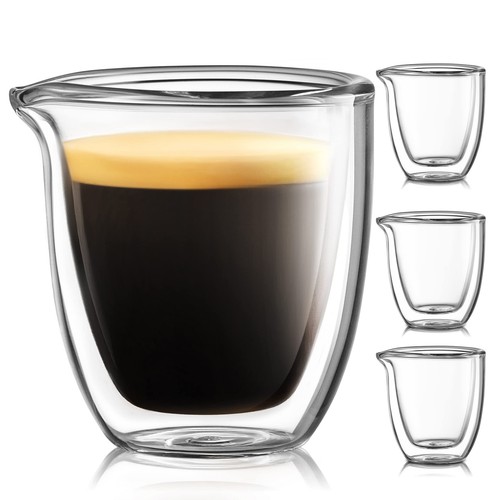
- Spout Design: Double-spout glasses make splitting shots for tasting easier; single-spout or beaker-style glasses are fine for solo use.
Ready to upgrade your workflow? Compare current options to see which type fits your machine and routine.
How Accurate Graduations Improve Your Espresso Workflow
Espresso is all about ratios: dose in, yield out. Using a shot glass with precise graduations lets you see—at a glance—whether you’re hitting your 1:2 or 1:2.5 target. For example, if you dose 18 grams of ground coffee, you’ll want to yield roughly 36–45 grams (or ml, for practical purposes) in your shot glass. A glass with ±1 ml graduation accuracy means you can trust the reading and make faster adjustments without always relying on a scale.
This is especially useful for home machines that don’t have built-in shot timers or volumetric controls. You can pull a shot, check the volume against your target, and decide if you need to grind finer, tamp harder, or adjust your dose. It’s a simple upgrade that pays for itself in fewer wasted shots and less guesswork.
Double-Spout vs. Single-Spout Shot Glasses—Which Makes More Sense?
Double-spout glasses are handy if you regularly split shots for tasting, dialing in recipes, or serving two drinks at once. They’re also easier for pouring into separate cups without spills. However, they tend to be lower profile (shorter), which can mean less capacity—watch out if you’re pulling larger lungos or want to avoid overflow.
Single-spout or beaker-style glasses, especially tall ones, are usually better if you’re mostly making solo drinks and want to minimize splashing or mess. They also tend to have more precise graduation marks, since they’re designed for measuring, not splitting. If you’re not sure which you’ll prefer, View what’s available and check the dimensions against your machine’s clearance.
Choosing Material: Glass, Stainless Steel, or Plastic?
Borosilicate glass is the gold standard for clarity and thermal resistance—it won’t crack with boiling water or rapid temperature changes. Tempered glass is a good runner-up but may cloud over time. Stainless steel won’t break, handles boiling temperatures easily, and is nearly indestructible, but you can’t see the shot’s color or crema through metal. Food-grade plastic (like polycarbonate) is lightweight and cheap, but scratches and stains more easily, and can retain odors after repeated use.
For most home brewers, borosilicate glass offers the best mix of visibility and durability. Still, if you have a history of breaking glassware, stainless steel or plastic are safer bets—just know you’ll sacrifice some visual feedback.
Want a break-resistant option? See today’s deals on stainless and plastic upgrades.
Total cost of ownership
Espresso shot glasses seem simple, but the long-term costs can add up. Here’s what to budget for beyond the initial purchase:
- Replacement Glasses: Even tough borosilicate can shatter from drops or thermal shock. Expect to replace 1–2 per year if you brew daily ($ to $$ annually, depending on material).
- Cleaning Supplies: Glass and stainless steel need regular descaling to avoid coffee oil buildup. A mild detergent or espresso cleaner every few weeks is usually enough—budget $ per year.
- Accessory Upgrades: Many home baristas eventually add a matching dosing cup or mini-pitcher for latte art. These accessories typically run $$ each, and you’ll likely want one within your first year.
- Scale Compatibility: If you upgrade to a larger shot glass, you may need a wider espresso scale to accommodate it. That’s a one-time $$ investment for most setups.
Factor these ongoing costs into your decision so you’re not caught off guard by a broken glass or a cleaning supply shortage.
Frequently Asked Questions About Espresso Shot Glasses for Machines
How do I know if a shot glass will fit under my espresso machine?
Measure the vertical space between your machine’s portafilter and drip tray. Most home machines offer 80–110 mm of clearance. Check the glass’s height before buying—some tall glasses won’t fit with a scale underneath. Always account for the scale’s thickness (usually 20–30 mm) when measuring.
What’s the most accurate graduation marking I should look for?
For espresso, look for glasses with graduation marks accurate to ±1 ml. This level of precision lets you confidently dial in your recipes without always relying on a scale. Cheaper glasses may be off by 3–5 ml, which can throw off your ratios and lead to inconsistent shots.
Glass vs. stainless steel—Which is better for tracking espresso extraction?
Glass lets you see the shot’s color, crema, and layering, which is useful for diagnosing channeling or under/over-extraction. Stainless steel is more durable but hides these visual cues. If you’re learning or troubleshooting your technique, glass is the better teacher; if you want something unbreakable, go steel.
How long does a typical espresso shot glass last with daily use?
Borosilicate and tempered glass shot glasses usually last 6–18 months with regular care, though accidental drops or extreme temperature swings can shorten their lifespan. Stainless steel and polycarbonate glasses can last several years, but may show wear from scratches or staining over time.
Are espresso shot glasses covered by warranty or return policies?
Most shot glasses come with a 30–90 day warranty against manufacturing defects such as inaccurate graduation marks or cracks on arrival. Breakage from drops or misuse typically isn’t covered. Always check the seller’s return policy before buying, especially if you’re ordering online.
Can I use regular kitchen shot glasses for espresso machines?
Standard shot glasses (often 30–45 ml) are usually too small for a full double espresso and may lack accurate measurement marks. They’re also prone to thermal shock and cracking under rapid temperature changes. Purpose-built espresso shot glasses are designed for higher volumes and repeated hot use, making them a better choice for home espresso machines.
Is it worth getting multiple shot glasses for home use?
If you regularly pull more than one shot at a time or experiment with different recipes, having two or more shot glasses speeds up workflow and makes side-by-side tasting easier. It’s a small investment that can make home barista life more convenient, especially if you entertain guests or like to compare beans.
Final thoughts: Pick the right espresso shot glass for your style
The best espresso shot glass for your machine comes down to fit, accuracy, and durability. Measure your clearance, check for precise graduations, and choose a material that matches your habits. For most, a borosilicate glass with ±1 ml graduations and 60–70 ml capacity is the sweet spot. If you’re rough on your gear or want something indestructible, stainless steel or polycarbonate options are smart alternatives. Don’t let a bad shot glass sabotage your espresso routine—invest in the right tool and enjoy more consistent, cleaner, and more enjoyable home espresso.
For more on espresso gear and technique, check out resources from the Specialty Coffee Association of America or browse trusted home coffee forums for real-world advice.
Related Guides
- Espresso Machine vs Moka Pot: What’s the Real Difference?
- Our guide to How to Adjust Espresso Machine Pressure: A Step-by-Step Guide
- Espresso Machine Water Filters That Are Actually Worth Using
- Our guide to Espresso Machines for Home Use, Reviewed
- AeroPress vs French Press: Which Makes Better Espresso-Style Coffee?
- Our guide to Burr vs Blade Grinders for Espresso: What’s the Real Difference?
- Browse all Coffee Essentials →
Last updated: May 2026 · Our editorial approach