9 min read
Disclosure: As an Amazon Associate and eBay Partner Network publisher, we earn from qualifying purchases. This doesn’t affect what we recommend or how we describe it.
Choosing between flat burrs and conical burrs for your next coffee grinder isn’t just about following the latest trends—it’s about understanding how each design affects your daily brew, your workflow, and your budget. Whether you’re trying to pull more consistent espresso shots at home, want better clarity in your pour-over, or simply want to know if upgrading your burrs will make a noticeable difference, you’ll find clear answers here. This guide breaks down how flat and conical burrs actually perform, what specs matter most, and what to expect at different price points—so you can make a confident decision without falling for marketing hype.
Flat Burrs vs Conical Burrs: Direct Comparison
| Category | Burr Shape | Burr Size (mm) | Grind Consistency | Noise Level (dB) | Price |
|---|---|---|---|---|---|
| Entry-Level Conical | Conical | 38–40 | Moderate (±200 microns) | 65–72 | $ |
| Mid-Range Flat | Flat | 50–54 | Fine (±100 microns) | 75–80 | $$ |
| Premium Conical | Conical | 63–68 | Fine (±80 microns) | 68–74 | $$$ |
| Premium Flat | Flat | 64–83 | Ultra-Fine (±60 microns) | 80–85 | $$$ |
Price: $ = budget, $$ = mid-range, $$$ = premium — relative to the options compared above. Live prices and current stock are below.
How Burr Shape Impacts Your Coffee
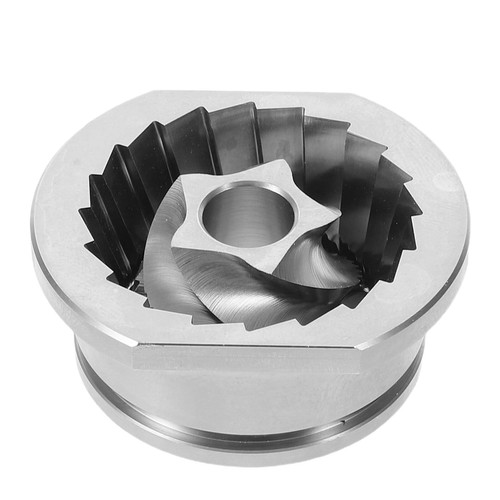
The core difference between flat and conical burrs comes down to geometry. Flat burrs use two parallel disks that force beans through a uniform cutting path, while conical burrs use a cone nested inside a hollow ring. This isn’t just a design quirk—it directly affects grind consistency, retention, and even the flavor profile of your coffee.
Flat burr grinders typically produce a narrower particle size distribution. This means fewer fines (tiny dust-like particles) and boulders (large chunks), which is crucial for espresso and pour-over methods that reward precision. If you’re chasing clarity and balance in your cup—especially for lighter roasts—flat burrs deliver a more predictable extraction. In practical testing, a good 64 mm flat burr setup can keep particle spread within ±60 microns, helping you dial in shots with fewer surprises.
Conical burrs, on the other hand, naturally create a bimodal grind: a blend of larger and smaller particles. This can help generate a fuller body and more forgiving extraction, especially in manual brewing or for those who prefer a richer, rounder profile. Entry-level conical burrs (38–40 mm) sometimes leave more fines, but larger 63–68 mm conicals in premium setups can approach the consistency of mid-range flats.
Retention, Cleaning, and Workflow Differences
Retention—the amount of ground coffee left inside the grinder after use—is often overlooked but matters for both flavor and convenience. Flat burr grinders, especially larger ones, tend to hold onto more grounds (sometimes 1–2 grams per dose), which can lead to stale coffee in your next shot. This is less of a problem for batch brewing but can frustrate single-dosing espresso enthusiasts. Some modern flat burr grinders address this with anti-static materials or redesigned chutes, but expect to brush out the burr chamber regularly.
Conical burrs, thanks to their vertical layout and gravity-assisted design, usually retain less—often under 0.5 grams per dose in well-designed models. This makes them a favorite for single-dosing and for home users who want to switch beans frequently.
Related Guides
- Aeropress Accessories That Are Actually Worth Buying
- Pour Over vs Drip Coffee Makers: Which Brewing Method Is Right for You?
- Our guide to How to Preheat a French Press for Better Coffee
- How to Descale a Drip Coffee Maker: A Step-by-Step Guide
- Our guide to Reusable Coffee Filters for Chemex: Which Ones Are Worth It?
- Our guide to How to Remove Coffee Stains From Your Machine: A Simple Guide
- Browse all Equipment Comparisons →
- How to Froth Milk Without a Steamer: Easy Methods for Home Brewers
Noise, Speed, and Heat: What to Expect Day-to-Day
Noise is a real consideration for home brewing, especially if you’re grinding early in the morning. Flat burr grinders, particularly those with larger burrs and higher RPM motors, are usually louder—expect 75–85 dB, comparable to a vacuum cleaner. Conical burr grinders run at lower RPMs, making them quieter (typically 65–74 dB), though smaller, cheaper models can get shrill if the motor struggles.
Speed is where flats shine: a 64 mm flat burr setup can grind 18 grams of espresso in under 8 seconds, while a 40 mm conical may take 20–25 seconds for the same dose. This matters if you’re making back-to-back drinks for a crowd, but for solo brewers or manual methods, the difference is less important.
Heat buildup is another factor. Larger flat burrs running at high speed can transfer more heat to the grounds, which may slightly affect flavor—especially in back-to-back espresso sessions. For most home users grinding one or two doses at a time, this is rarely a dealbreaker, but it’s worth noting if you’re sensitive to subtle flavor shifts.
Flavor Clarity vs Forgiveness: Matching Burrs to Your Brewing Style
If you’re after sparkling clarity and want to highlight the unique notes of single-origin beans, flat burrs usually have the edge. They extract more evenly and make it easier to taste the difference between a washed Ethiopian and a natural Brazil. This is why most high-end espresso and filter grinders use flat burrs above 64 mm.
Conical burrs, especially in the 63–68 mm range, produce a rounder, sweeter cup with more body. They’re also more forgiving—if your grind size is a little off, you’re less likely to end up with sour or bitter flavors. For manual brewing methods like French press or Aero-style immersion, and for those who want a richer mouthfeel, conicals are a solid choice.
When Burr Size Matters More Than Shape
Burr size isn’t just about speed—it changes the character of your grind. Larger burrs (over 60 mm) in either shape produce more consistent results and generate less heat. Entry-level conical burr grinders (38–40 mm) can’t match the particle uniformity of a 64 mm flat or conical. If you’re upgrading from a basic blade grinder, even a small 38 mm conical will be a huge leap forward, but true espresso consistency usually starts at 50 mm and up.
For most home brewers, the sweet spot is a 50–54 mm flat or a 63 mm conical. These offer a strong balance of grind quality, reasonable price, and manageable size. Anything above 64 mm is premium territory—expect to pay for the privilege, and make sure you have the counter space to match.
Compare current options if you want to see which burr sizes are available in your price range.Maintenance Realities: Cleaning and Longevity
Both flat and conical burrs are made from hardened steel or, less commonly, ceramic. Steel burrs last longer—expect 500–750 kg of coffee for a typical home user before performance drops, which translates to 10+ years at one espresso a day. Ceramic burrs stay sharp but can chip if you hit a stone in your beans.
Cleaning is easier with conical burrs since you can often access the burr chamber by removing just a single screw or twisting off the top. Flat burrs sometimes require removing more parts, which can be fiddly. Regular cleaning (every 1–2 months for daily use) helps prevent old grounds from going rancid and keeps your grind consistent.
View what’s available for burr sets and grinder accessories if you’re planning to upgrade or replace worn parts.Price-to-Performance: Where the Value Lies
Entry-level conical burr grinders are the most affordable way to get uniform grounds, typically priced in the $ tier. They’re perfect for drip, French press, and can handle espresso in a pinch, though dialing in may be less precise. Mid-range flat burr grinders ($$) are ideal for espresso-focused users who want to taste subtle differences between beans. Premium options ($$$) in both shapes deliver outstanding grind quality, but the diminishing returns set in fast—unless you’re chasing café-level clarity, you may not notice a huge leap above well-made mid-range models.
See today’s deals on both conical and flat burr grinders to find what fits your budget and brewing style.FAQs: Flat Burrs vs Conical Burrs for Home Coffee
How often should burrs be replaced in a home grinder?
Steel burrs typically last 500–750 kg of coffee before needing replacement, which for most home users is 10 years or more at one espresso shot per day. If you notice your grind getting uneven or your shots tasting flat despite fresh beans, it’s time to consider new burrs.
Which burr type is better for espresso: flat or conical?
Flat burrs generally offer more precise grind size control and produce the clarity needed for espresso, especially on machines running at 9 bars of pressure. However, high-end conical burrs (63 mm and larger) can deliver excellent espresso with a richer body, and are more forgiving if your technique isn’t perfect.
Are flat burr grinders always louder than conical?
Flat burr grinders tend to be louder, especially those with larger burrs and higher RPM motors, often reaching 80–85 dB. Conical burr grinders run at lower RPMs and are typically quieter, making them a better choice for noise-sensitive environments.
Do flat burrs or conical burrs work better for single dosing?
Conical burr grinders have lower retention—often less than 0.5 grams per dose—which makes them ideal for single dosing and switching beans. Flat burr grinders can retain more grounds, so they may require extra steps to clear out old coffee between doses.
How does burr size affect grind consistency?
Larger burrs (over 60 mm) in either shape produce a more uniform grind and generate less heat during grinding. This consistency is especially important for espresso and pour-over brewing, where extraction is sensitive to particle size distribution.
What warranty or maintenance concerns should buyers consider?
Most home grinders offer one- to two-year warranties covering motor and electrical failures, but burrs are typically considered wear parts. Always check for parts availability—especially replacement burrs—before buying. If you plan to grind oily or flavored beans, clean your grinder more often to prevent clogging and flavor carryover.
Flat vs conical: which is more forgiving for beginners?
Conical burr grinders are more forgiving thanks to their bimodal grind profile, which can help mask small errors in dose or tamping. Flat burrs reward precision and consistency, which is great if you want to experiment, but may require more dialing in to avoid sour or bitter flavors.
Further Reading: Trusted Sources on Burr Grinders
For deeper technical detail, see the Wikipedia entry on coffee grinders and the Specialty Coffee Association’s standards for grinder testing and particle size distribution.
Whether you’re stepping up from a blade grinder or fine-tuning your espresso game, understanding the trade-offs between flat and conical burrs helps you make the right investment for your daily cup. Choose what fits your brewing style, your budget, and your taste preferences—and enjoy the difference every morning.
Last updated: May 2026 · Our editorial approach