
7 min read
Disclosure: As an Amazon Associate and eBay Partner Network publisher, we earn from qualifying purchases. This doesn’t affect what we recommend or how we describe it.
Travel mugs in hand, moka pot fans and espresso lovers both want richer, more consistent coffee at home. Maybe you’re a moka pot beginner frustrated by uneven brews, or an espresso enthusiast eager to bring café-like technique to your stovetop. Or perhaps you just want to make your morning ritual less messy and more repeatable. The right espresso distribution tool can make a surprising difference in moka pot results—if you choose and use it wisely.
Why moka pot tamping and distribution even matter
Moka pots don’t brew true espresso, but they do rely on pressure and fine coffee. That means your grounds need to be evenly distributed—no clumps, no channels, no empty corners. Just like with espresso, uneven distribution leads to bitter, watery, or inconsistent cups. But moka pots are smaller and less forgiving than most espresso baskets. Over-tamping or using the wrong tool can block water flow or cause leaks. The goal is simple: fill the basket evenly, settle the grounds, and avoid compacting them too hard.
Choose the right espresso distribution tool for moka pot use
Not every espresso tool works well with a moka pot. Here’s what matters:
- Basket diameter: Most moka pots use a basket between 45mm and 60mm wide. Many espresso tools are sized for 58mm baskets—too large for most moka pots.
- Depth: Moka pot baskets are shallow (8–18mm deep). Tall espresso tools may bottom out, displacing grounds or making a mess.
- Weight: Heavy tampers can compact moka pot grounds too much. Look for lighter tools (50–150g) or those designed for gentle distribution, not pressure tamping.
- Material: Stainless steel and aluminum are easy to clean. Wood looks nice but swells if left wet. Food-grade plastic is fine for budget options.
- Height adjustment: Adjustable depth lets you dial in how firmly the tool settles the grounds—critical for moka pots, which clog easily if grounds are packed too tightly.
Some moka pot users go DIY, using the back of a spoon or a finger swipe. It works in a pinch, but a well-matched distribution tool saves time and improves repeatability. Want to see how different tool types stack up? The table below compares the most common options.
Spot the difference between moka pot distribution tool options
| Tool Type | Basket Fit Range (mm) | Adjustable Depth | Weight (g) | Ease of Cleaning | Price |
|---|---|---|---|---|---|
| Mini Palm Distributor | 45–54 | Yes (2–8mm) | 110 | Rinse Only | $$ |
| Twist-Action Leveler | 48–58 | No | 85 | Dishwasher Safe | $$$ |
| Flat Mini Tamper | 43–51 | No | 60 | Wipe Clean | $ |
| DIY Spoon/Spatula | Any | — | 20 | Hand Wash | $ |
Get better moka pot results with the right tool
Mini palm distributors are the closest match for most moka pot users. Their compact size (45–54mm) fits the common 3- or 6-cup moka baskets, and the adjustable depth lets you avoid over-compression. Twist-action levelers are more common in espresso prep, but some compact models fit moka baskets and add a swirling action that breaks up clumps. Flat mini tampers are simple, lightweight, and cheap—just don’t tamp hard; use a gentle press to settle the grounds. DIY options (spoon, butter knife, chopstick) work for casual users but lack repeatability.
Looking to upgrade your moka pot workflow? Check current prices on mini palm distributors sized for moka pots, or See today’s deals on twist-action levelers with adjustable heads.
How to use an espresso distribution tool with a moka pot
Here’s a step-by-step guide for beginners and enthusiasts alike:
- Grind your coffee just finer than drip (aim for table salt texture). Too fine leads to clogs; too coarse causes weak coffee. A grind size of 400–600 microns is a good starting point.
- Fill the filter basket level to the rim—don’t heap or underfill. Shake gently to settle.
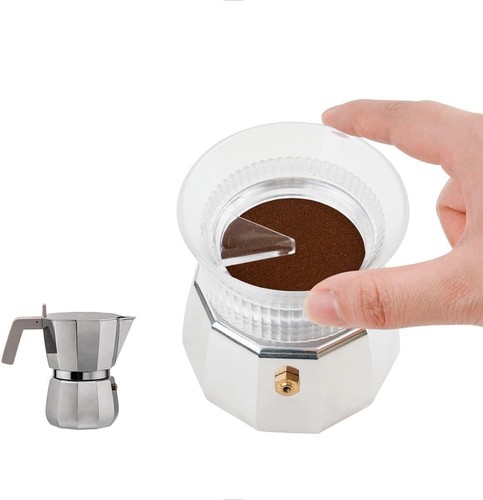
- Place your distribution tool over the basket. If using a mini palm distributor, set the depth so it just smooths the grounds, not compresses them. Rotate gently 1–2 times.
- If using a twist-action leveler, rotate in place for 2–3 seconds to break up clumps and even out the surface.
- If using a mini tamper, press with minimal force—just enough to level the surface. Never tamp hard; moka pots aren’t designed for espresso-level pressure.
- Clean off any stray grounds from the basket rim—this ensures a good seal and prevents leaks.
- Assemble the moka pot and brew as usual.
Consistency is key. Use the same tool, depth, and grind each time to dial in your perfect cup.
Related Guides
- How to Use an Espresso Distribution Tool: A Practical Guide
- Our guide to Espresso Machine vs Moka Pot: What’s the Real Difference?
- Manual Espresso Levers That Are Actually Worth Buying
- The Best Compact Espresso Machines for Small Kitchens and Home Setups
- Espresso Machines for Home Use, Reviewed
- Our guide to Stovetop Espresso Makers, Reviewed and Ranked
- Browse all Espresso & Milk →
Total cost of ownership
Buying a moka pot distribution tool is not a one-and-done purchase. Here’s what to expect over time:
- Replacement gaskets: Moka pot seals wear out. Plan on replacing the silicone or rubber gasket every 6–12 months ($3–10/year depending on use).
- Cleaning supplies: Stainless and aluminum tools last, but you’ll want a non-abrasive brush or cloth for regular cleaning ($5–8/year).
- Lost or damaged parts: Small tools can disappear in kitchen drawers or get dented. Budget for occasional replacements every 2–3 years.
- Water and energy: Moka pots use stovetop energy and water for cleaning and brewing. Expect about 0.5–1 kWh per week for regular users; not huge, but it adds up over a year.
- Upgrades: As your skills grow, you may want to try different distribution tools or basket sizes—especially if you switch moka pot sizes or brands.
For most users, annual costs are modest—mainly gaskets and cleaning. But don’t forget the invisible costs of time and trial-and-error as you dial in your technique.
What actually happens if you skip distribution in a moka pot?
Skipping distribution usually leads to uneven extraction. You’ll get “hot spots” where water finds the path of least resistance, leaving some grounds under-extracted and others over-extracted. The result: harsh bitterness, sour notes, or thin body. Even a simple distribution tool (or consistent finger swipe) improves flavor and consistency.
Mini palm distributor vs flat tamper — which is better for moka pots?
Mini palm distributors are better for moka pots because they level grounds without compacting them. Flat tampers (even mini ones) risk packing the coffee too tightly, which can block water flow and cause sputtering or leaks. If you must use a tamper, press very gently—never with espresso-level force.
How do I know if a distribution tool will fit my moka pot?
Measure your filter basket’s diameter with a ruler or calipers. Most moka pots fall between 45mm and 54mm. Choose a distribution tool with a diameter 1–2mm smaller than your basket for a snug but non-jamming fit. Adjustable-depth tools are more forgiving if your basket is shallow.
Can I use the same tool for both moka pot and espresso machine?
Usually not. Standard espresso tools are 58mm wide—too large for most moka pots. Some compact tools (48–51mm) work for both, but double-check your basket sizes. If you own both devices, investing in a second, moka-specific tool is worth it for best results. Compare current options designed for moka pots and espresso machines.
How often should I replace my distribution tool?
Quality stainless or aluminum tools last 5–10 years if cleaned regularly. Plastic or wood tools may need replacement every 2–3 years, especially if exposed to moisture or heat. Replace your tool sooner if it warps, cracks, or no longer fits your basket properly.
What’s the best way to clean a moka pot distribution tool?
Rinse immediately after use to prevent coffee oils from building up. For deep cleaning, use a soft brush and mild detergent weekly. Avoid abrasive pads, which can scratch metal or plastic surfaces. Dishwasher-safe tools are convenient, but hand washing extends lifespan.
Are there any warranty or return issues with moka pot distribution tools?
Most distribution tools carry a 1-year manufacturer’s warranty against defects, but policies vary. Always check return windows before buying, especially if ordering online. Fit and compatibility issues are the most common reason for returns—measure your basket before purchase to avoid hassle.
Does a moka pot distribution tool really make a difference?
For most home brewers, yes. Even distribution reduces channeling and bitterness, and makes your results more repeatable. It’s not a magic bullet—grind size, freshness, and water temperature still matter—but it’s a low-cost upgrade with noticeable benefits. For more on moka pot technique and best practices, check resources like Serious Eats for in-depth coffee guides.
Ready to level up your moka pot game? View what’s available and find a distribution tool that fits your basket and your brewing style.


Last updated: June 2026 · How we cover this topic