Disclosure: As an Amazon Associate and eBay Partner Network publisher, we earn from qualifying purchases. This doesn’t affect what we recommend or how we describe it.
7 min read
You want espresso at home that actually tastes like espresso—creamy, rich, and balanced, not thin or bitter. The grinder you choose is the biggest factor in getting there. The debate over burr vs blade grinder for espresso is less about hype and more about hard facts: only one of these tools consistently delivers the fine, even grind espresso demands. But is a burr grinder always worth the extra cost? Can you make do with a blade grinder if you’re just starting out? Here’s what you need to know, whether you’re weighing your first grinder or looking to upgrade for better shots. For more detail, see National Coffee Association grinder guide.
Why Espresso Grinds Are Different From Drip or French Press
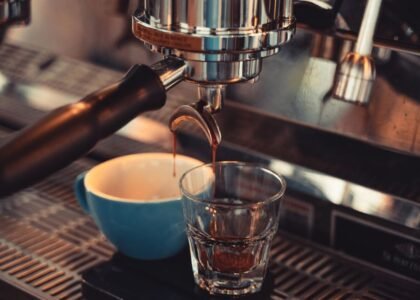
Espresso isn’t just strong coffee. It’s an extraction method that pushes hot water through a compacted puck of finely ground coffee at 9 bars of pressure (roughly 130 psi) in about 25-30 seconds. This process demands a grind size between 200 and 400 microns—finer than table salt, coarser than powdered sugar. Any significant deviation throws off extraction, leading to sour, bitter, or watery shots. For more detail, see NIST Weights and Measures standards.
Drip and French press are much more forgiving. You can get away with inconsistent particle sizes there. With espresso, grind consistency is non-negotiable.
If you’ve narrowed your shortlist and want new stock with free returns, Amazon is the practical choice.
Check Amazon →Burr vs Blade Grinder: What’s Actually Happening Inside?
Burr grinders use two revolving abrasive surfaces (burrs) to crush beans to a uniform particle size. You adjust the gap between the burrs to select your grind. Burrs can be flat or conical, ranging from 38mm to 64mm in home models. Blade grinders, by contrast, have spinning blades (think mini food processor) that chop beans randomly, resulting in a mix of dust and chunks. There’s no true grind adjustment—just longer or shorter bursts.
This difference in mechanism is why burr grinders dominate serious home espresso setups.
Comparison Table: Burr vs Blade Grinders for Espresso
| Grinder Type | Grind Consistency | Adjustability (Settings) | Espresso Particle Size Range | Burr/Blade Size | Typical Price Range |
|---|---|---|---|---|---|
| Entry-Level Blade Grinder | Poor – wide variance (100–2000+ microns) | None (timing only) | Rarely achieves 200–400 microns | Blade: 40–50mm | $15–$40 |
| Entry-Level Burr Grinder | Fair – some clumping, less fines (400–900 microns) | 15–30 stepped settings | Can reach 300–500 microns with effort | Burr: 38mm conical | $60–$120 |
| Espresso-Focused Burr Grinder | Good – uniform (200–500 microns) | 40+ stepless or micro-stepped | 200–400 microns consistently | Burr: 48–54mm flat/conical | $180–$450 |
| High-End Manual Burr Grinder | Excellent – minimal fines (200–400 microns) | 30–60 stepless | 200–400 microns by design | Burr: 38–42mm conical | $90–$250 |
Why Blade Grinders Fail for Espresso
Blade grinders simply can’t deliver the grind size uniformity that espresso requires. The blade’s chopping action creates a chaotic mixture: some grounds are powder-fine (over-extracted, bitter), while others are pebble-sized (under-extracted, sour). Even with sifting, you’ll never achieve the fine, consistent grind that allows water to flow evenly through the puck at 9 bars of pressure.
Espresso machines struggle with this inconsistency. You’ll see channeling—water jets through weak spots in the puck—resulting in uneven, disappointing shots. No amount of tamping or tweaking can fix what starts at the grinder.
Blade grinders also lack real grind adjustment. You can grind longer, but this mostly creates more fines. There’s no dial or setting to home in on the ideal espresso grind.
What Burr Grinders Get Right for Espresso
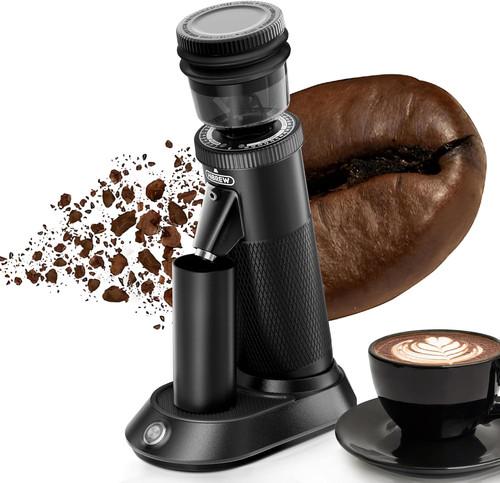
Burr grinders, especially those designed for espresso, offer precise, repeatable grind settings. Most espresso-capable home burr grinders have at least 40 settings, with some offering stepless adjustment for dialing in shot time to within 1–2 seconds. The best models produce a narrow particle size distribution (PSD) in the 200–400 micron range, which means even extraction and predictable results.
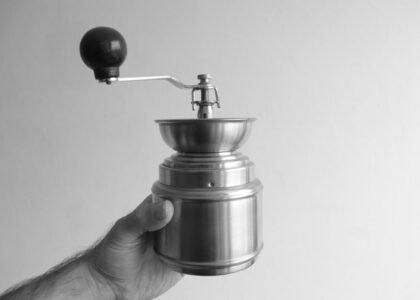
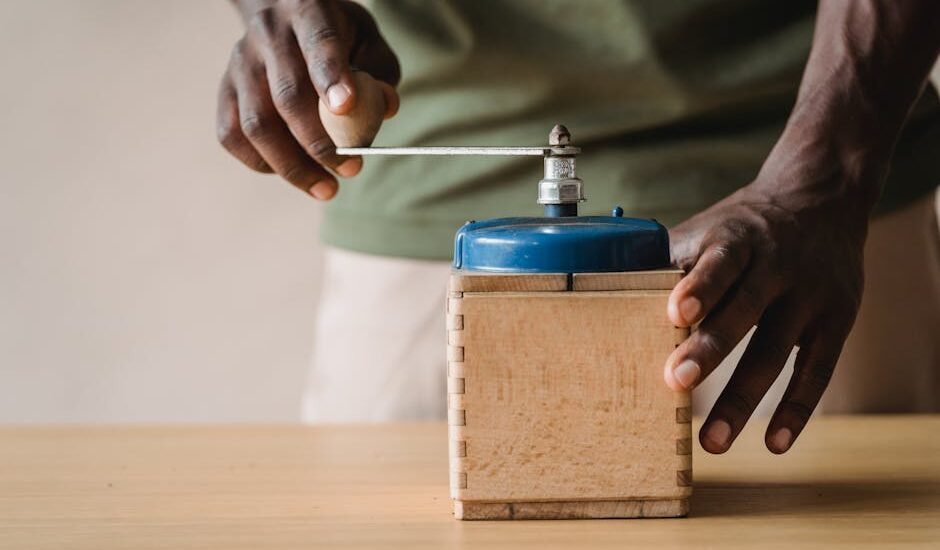
Flat burrs (often 54mm or larger) are prized for their uniformity, but even a well-made 38–42mm conical burr can deliver excellent espresso at home. Manual burr grinders in this range can outperform cheap electric burrs, though they require more effort per shot.
With a burr grinder, you can reliably tweak grind size to adjust extraction time, balance flavor, and compensate for bean age or roast level. This control is impossible with a blade grinder.
Is There a “Good Enough” Scenario for Blade Grinders?
If your budget is extremely tight, and you’re using a pressurized portafilter basket (the kind with a tiny single hole at the bottom), a blade grinder might produce something drinkable—but it won’t be real espresso. Pressurized baskets mask grind inconsistency, but at the cost of flavor clarity and crema quality. Even so, you’ll likely outgrow this setup fast.
If you want to make true espresso at home—even with a budget machine—upgrading to a burr grinder will have a bigger impact on taste than any other gear purchase. For less than the cost of a mid-range espresso machine, you can get a manual burr grinder that will dramatically improve every shot you pull. Compare current options.
How Much Should You Spend on a Burr Grinder for Espresso?
For entry-level espresso, expect to spend at least $90–$120 for a manual burr grinder, or $180–$250 for a basic electric model with fine enough adjustment. Grinders below this range often struggle to grind fine enough or consistently enough for espresso. Remember, a $300 espresso machine paired with a $40 blade grinder will never outperform a $100 manual burr grinder and a $200 espresso machine.
If you’re serious about espresso and plan to upgrade machines in the future, invest in your grinder first. Burrs last thousands of pounds of coffee and can often be replaced or upgraded down the line. See today’s deals.
What to Look For in a Home Espresso Burr Grinder
- Grind Range: Must reach at least 200–400 microns for true espresso. Some grinders only go down to 600 microns—check specs carefully.
- Adjustment Type: Stepless or micro-stepped grinders allow for fine-tuning shot time. Stepped grinders with fewer than 20 settings are rarely precise enough.
- Burr Size and Material: Larger burrs (48mm+) produce less heat and more uniform grounds, but even 38–42mm conical burrs can suffice for home use. Hardened steel is standard; ceramic burrs stay sharp longer but chip more easily.
- Retention: Look for models with low retention (less than 1g) to minimize stale grounds in your next shot.
- Ease of Cleaning: Espresso grinds cling to burrs and chutes; a design that allows easy access for cleaning will save headaches.
Ready to step up your espresso game? View what’s available.
If you’ve narrowed your shortlist and want new stock with free returns, Amazon is the practical choice.
Compare Options on Amazon →FAQs About Burr vs Blade Grinder for Espresso
Can I use a blade grinder for espresso in a pinch?
You can try, but the flavor will suffer. Expect inconsistent extraction, weak crema, and a mix of sour and bitter notes. For anything beyond emergency use, a burr grinder is essential.
Are manual burr grinders good enough for daily espresso?
Yes, many manual burr grinders outperform entry-level electric burrs for espresso, especially those with 38–42mm burrs and stepless adjustment. They require more effort but deliver excellent results for the price.
What grind size should I aim for with espresso?
Espresso typically needs a grind size between 200 and 400 microns. The exact setting varies by machine, basket, and beans, but this is the sweet spot for balanced extraction and crema.
How do I know if my grinder is producing the right grind for espresso?
Check your shot time: a double shot (18–20g in, 36–40g out) should extract in 25–30 seconds at 9 bars of pressure. If shots run too fast, grind finer; if too slow, grind coarser. Examine your grounds under a magnifier—uniformity matters more than color.
Is a more expensive burr grinder always better?
Not always. Some mid-priced grinders punch above their weight, especially if you don’t need huge hopper capacity or ultra-fast grinding. Focus on burr size, adjustment range, and grind consistency, not bells and whistles.
Can I use one grinder for both espresso and pour-over?
Some high-quality burr grinders can handle both, but espresso demands much finer and more precise adjustment. Many grinders are optimized for one or the other, so check the grind range and the number of adjustment steps before buying.
The Bottom Line: Burr vs Blade Grinder for Espresso
For espresso, the grinder is not the place to cut corners. Blade grinders simply can’t deliver the fine, even grind required for balanced shots. Burr grinders—manual or electric—offer the control and consistency you need, and even an entry-level model will transform your results. If you want café-style espresso at home, start with the right grinder. Check current prices and make your next shot your best yet.
Related Guides
- How Is Crema Formed in Espresso? The Science Behind the Signature Foam
- How to Season a New Coffee Grinder: A Step-By-Step Guide
- What’s the Ideal Pressure Setting for Espresso Machines?
- How to Adjust Espresso Machine Pressure: A Step-by-Step Guide
- Coffee Grinder Cleaning Brushes That Actually Work
- Browse all Equipment Comparisons →
- Our guide to Single Dose Grinders With Hoppers: What to Know Before You Buy