7 min read
Disclosure: As an Amazon Associate and eBay Partner Network publisher, we earn from qualifying purchases. This doesn’t affect what we recommend or how we describe it.
Hard water stains, slow boiling times, and chalky residue are all signs your kettle needs descaling. Whether you’re a daily tea drinker, a home espresso enthusiast, or just want your appliances to last, descaling a kettle at home makes a real difference in both taste and performance. Here’s how to do it right, which methods actually work, and what most guides don’t mention about cost, safety, and longevity.
Why kettle descaling matters for coffee and tea lovers
Limescale isn’t just an eyesore. It acts as an insulator, making your kettle work harder and use more electricity for the same job. If you brew pour-over or use a gooseneck kettle for precision, even a thin layer of scale can throw off temperature control by 2–5°F (1–3°C). For anyone chasing the perfect cup, that’s enough to notice. Plus, scale buildup can shorten your kettle’s lifespan and leave a flat, mineral taste in your drinks.
What most guides get wrong about homemade vs store-bought descalers
There are plenty of ways to descale a kettle—some cost pennies, others market themselves as “professional strength.” But not all methods are created equal. The main approaches fall into four categories: citric acid powder, white vinegar, specialty descaler solutions, and lemon juice. Each has a different descaling strength, required contact time, and impact on kettle materials.
| Method | Descaling Strength | Required Contact Time | Material Compatibility | Odor/Taste Residue |
|---|---|---|---|---|
| Citric Acid Powder | High (10–20g/L) | 20–30 minutes | Safe for stainless, glass, plastic | Minimal |
| White Vinegar (5% acetic acid) | Medium | 30–60 minutes | Can etch some metals over time | Strong vinegar smell |
| Specialty Descaler Solution | Very High (formulated acids) | 10–20 minutes | Optimized for all kettle types | Usually odorless |
| Lemon Juice (fresh or bottled) | Low | 60–90 minutes | Safe for all, may stain plastics | Mild citrus scent |
Step-by-step: How to descale your kettle for best results
The best method depends on your priorities—speed, odor, and how much scale you’re dealing with. Here’s a practical guide for each approach, with exact measurements and timeframes. Always check your kettle’s manual for warnings about acids or harsh chemicals, especially for models with coated heating elements or plastic liners.
- Citric Acid Powder: Dissolve 10–20 grams (about 2–4 teaspoons) in 1 liter of hot water. Fill the kettle, let it sit for 20–30 minutes (do not boil), then scrub any remaining residue with a soft brush. Rinse thoroughly—at least two full boils with clean water.
- White Vinegar: Mix equal parts vinegar and water (500 mL each for a 1-liter kettle). Pour in, let soak for 30–60 minutes. For heavy buildup, boil the solution, then let cool before rinsing. Vinegar can leave a lingering smell—boil clean water at least twice to clear it.
- Specialty Descaler Solution: Follow label instructions, as concentrations vary. Most require you to add 25–50 mL of liquid descaler per liter of water, soak for 10–20 minutes, then rinse. These are formulated to work quickly and avoid odors—ideal if you want a “set and forget” option. Check current prices
- Lemon Juice: Use 100 mL of juice per liter of water. Fill, boil, and let soak for 60–90 minutes. Lemon is gentle but slow, best for light scale. Rinse thoroughly; citric oils can make water taste slightly sweet for a few boils.
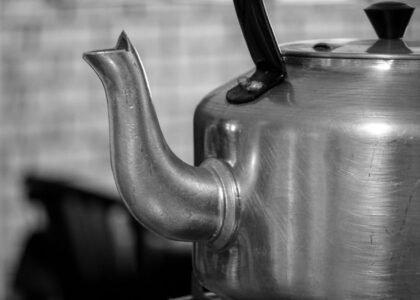
For all methods: never use abrasive pads or steel wool, which can scratch the kettle and lead to faster scale return. Wipe the spout and lid, where scale often hides. If the kettle has a removable filter, soak it in your chosen solution as well.
How often should you descale your kettle?
Frequency depends on your water hardness. For soft water (under 60 mg/L calcium carbonate), every 2–3 months is enough. For hard water (over 120 mg/L), monthly descaling keeps scale at bay and taste fresh. If your kettle takes noticeably longer to boil, or you see white flakes, it’s time to descale.
Related Guides
- Our guide to Stovetop Kettle vs Electric Kettle: Which Is Better for Home Brewing?
- Our guide to How to Descale a Kettle at Home: A Simple Step-by-Step Guide
- Our guide to Compact Espresso Machines for Small Kitchens and Home Setups
- Conical Burr Grinders for Great Drip Coffee at Home
- Flat Burrs vs Conical Burrs: Which Grinder Is Best for Home Use
- Single vs Double Espresso Filters: Which Should You Use at Home?
Why water quality changes your descaling schedule
Most guides ignore regional differences, but your tap water’s mineral content is the biggest factor in scale buildup. Water classified as “hard” can double or triple the rate of limescale formation compared to soft water. You can check your local water hardness on your city’s utility website or with a simple test strip (usually 0–500 mg/L range). For those using filtered or bottled water, scale still forms—just slower. Reverse osmosis or deionized water nearly eliminates scale but is overkill for most homes and can taste flat in coffee or tea.
Total cost of ownership
Descaling isn’t just about the upfront price of cleaners. Here are the real costs to budget for over a year of kettle use:
- Descaling agent: Citric acid powder costs about $5–$10 per year (assuming monthly use for a 1-liter kettle). Specialty descalers run $20–$40 per year.
- Replacement filters: Many modern kettles have removable mesh filters at the spout. These clog with scale and need replacing every 6–12 months, costing $5–$15 each.
- Increased energy use: A scaled kettle takes up to 10% more electricity per boil. Over a year of daily use, that’s an extra $5–$15 on your utility bill in hard water areas (see energy.gov for appliance energy facts).
- Potential part replacements: Heating elements exposed to heavy scale may fail early, especially in budget kettles. Replacing a heating element (if possible) can run $20–$40, or require a full kettle replacement.
Factoring these into your annual budget gives a clearer picture than just looking at the cleaner’s price tag. See today’s deals
FAQs: Descaling a kettle at home
How often should I descale if I live in a hard water area?
For water with over 120 mg/L calcium carbonate (typical of hard water), monthly descaling is recommended. If you notice scale forming faster, consider every 2–3 weeks. This keeps your kettle efficient and your drinks tasting clean.
Citric acid vs vinegar: which is better for stainless steel?
Citric acid is generally preferred for stainless steel kettles. It’s less corrosive, leaves minimal odor, and effectively dissolves scale at a 10–20g/L concentration. Vinegar works, but repeated use can dull the finish over time and leave a persistent smell.
What if my kettle has a non-stick coating?
Always check your manual first. Many non-stick or coated kettles warn against acidic cleaners like vinegar or citric acid, as they can damage the lining. In these cases, use a specialty descaler formulated for coated appliances. Compare current options
How long does a typical descaling cycle take?
Most at-home descaling methods require 20–60 minutes of soaking, plus rinsing and a couple of clean boils. Citric acid and specialty solutions are fastest (20–30 minutes), while vinegar and lemon juice need longer (up to 90 minutes for stubborn scale).
Is it safe to use descaler in a kettle I also use for baby formula or sensitive drinks?
Yes, as long as you rinse thoroughly after descaling. Boil at least two full kettles of clean water after the process to remove any cleaner residue. For extra peace of mind, stick to food-safe descalers or citric acid, and avoid harsh chemicals.
Will descaling void my kettle’s warranty?
Most manufacturers expect you to descale regularly, but using the wrong cleaner (like undiluted vinegar or abrasive pads) can void the warranty. Keep your manual and any receipts for descaling agents, as some brands require proof of proper maintenance for warranty claims.
How to keep scale from coming back so quickly
While you can’t change your water’s minerals, you can slow scale buildup. Emptying the kettle after each use prevents standing water from evaporating and leaving minerals behind. Wipe the inside dry if possible, and descale before thick layers form. If you brew coffee or tea directly in the kettle, rinse thoroughly—tannins can speed up scale formation.
Where to find more on safe, effective descaling
For more on water quality, appliance care, and safe cleaning agents, see the NSF’s home appliance standards or your local water utility’s resources. Staying informed keeps both your drinks and your gear in top shape.
Ready to make descaling less of a chore? View what’s available and pick the method that fits your routine, budget, and taste. Your kettle—and your coffee—will thank you.


Last updated: July 2026 · How we cover this topic