8 min read
Disclosure: As an Amazon Associate and eBay Partner Network publisher, we earn from qualifying purchases. This doesn’t affect what we recommend or how we describe it.
Most coffee guides insist that you need a high-end electric grinder for real espresso at home. The truth is, if you’re patient and particular, a manual grinder can deliver espresso-worthy results—without the noise, counter clutter, or wallet shock of a motorized model. But not every hand grinder is up to the task. Getting a fine, consistent espresso grind demands more from a manual grinder than from almost any other brew style. Let’s break down two of the most compelling options available right now, and what you need to know before pulling the trigger.
Top picks at a glance
- 1Zpresso K-Ultra Manual Coffee Grinder Iron Gray with Carrying Case — the premium option for espresso
- Wacaco Exagrind Manual Coffee Grinder Stainless Steel Burrs — the compact, travel-friendly pick
Spot the difference between the top manual espresso grinders

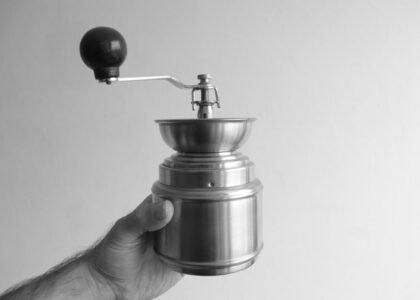
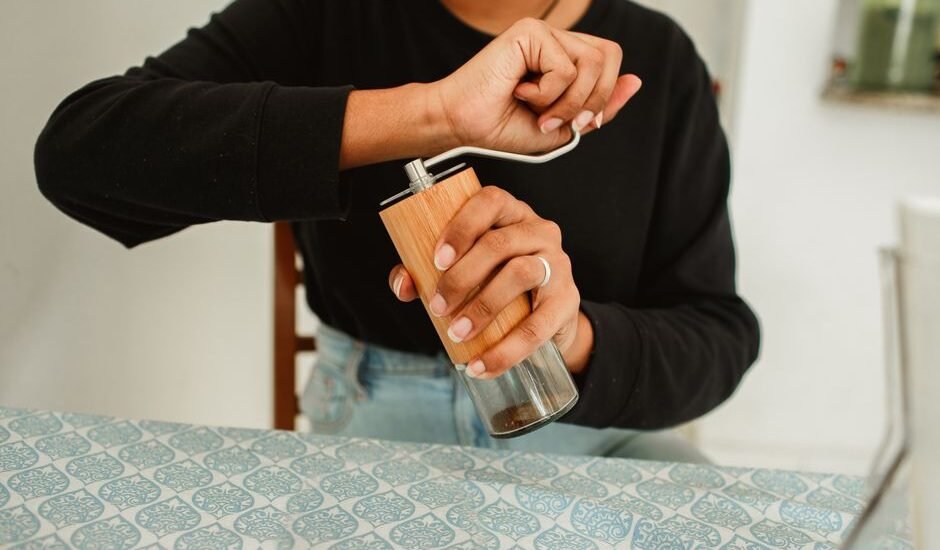
Pictured: 1Zpresso K-Ultra
| Product | Condition | Price | Best For | Burr Material | Approx. Weight |
|---|---|---|---|---|---|
| 1Zpresso K-Ultra Manual Coffee Grinder Iron Gray with Carrying Case |
New | $$$ | Premium espresso results | Stainless Steel | — |
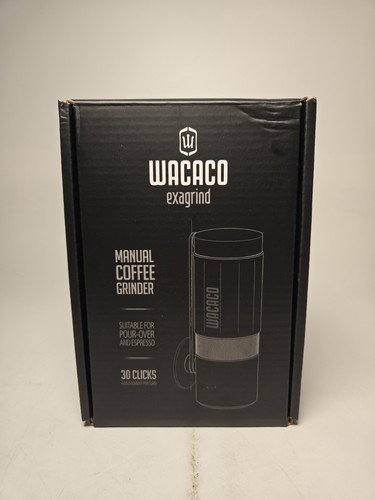 Wacaco Exagrind Manual Coffee Grinder Stainless Steel Burrs Wacaco Exagrind Manual Coffee Grinder Stainless Steel Burrs |
Open Box | $ | Travel & compact use | Stainless Steel | — |
Price: $ = budget, $$ = mid-range, $$$ = premium — relative to the options compared above. Live prices and current stock are below.
Related Guides
- Manual Coffee Grinders: A No-Nonsense Buyer’s Guide
- Ceramic vs Stainless Steel Coffee Grinders: Which Should You Choose?
- How to Reset a Manual Coffee Grinder: Step-by-Step Guide
- Choosing the Right Coffee Dosing Cup for Espresso: What to Know
- Our guide to Manual Espresso Levers That Are Actually Worth Buying
- Our guide to Manual Milk Frothers for Coffee: What to Know Before You Buy
- Browse all Brewing Guides →
Choose the right grinder for your espresso routine
Espresso is demanding. You need a grind fine enough for high-pressure extraction, but also consistent enough to avoid channeling (where water finds a weak spot and ruins your shot). Both the 1Zpresso K-Ultra and Wacaco Exagrind use stainless steel burrs—a must for espresso-level performance. But their designs, adjustment systems, and real-world use cases differ in ways that matter.
1Zpresso K-Ultra: premium build for espresso fanatics
By spec, the 1Zpresso K-Ultra Manual Coffee Grinder Iron Gray with Carrying Case is aimed squarely at espresso enthusiasts who want maximum grind control. It features a robust stainless steel burr set and a highly granular external adjustment dial—typically offering over 100 grind settings, with steps as fine as 20 microns (0.02 mm). This kind of precision lets you dial in the exact resistance and shot timing needed for espresso, whether you’re using a manual lever, a prosumer machine, or even a portable espresso maker.
The K-Ultra’s larger body and burr set mean faster grinding and easier cranking, even at espresso fineness. The included carrying case is a nod to portability, but make no mistake: this is a substantial, premium grinder that feels at home in a dedicated coffee corner. If you want to experiment with grind size, shot time, and recipe tweaks, the K-Ultra gives you room to explore. It’s a significant investment, but the build quality and adjustability are hard to beat in the manual grinder world.
Wacaco Exagrind: travel-friendly, minimalist, and affordable
The Wacaco Exagrind Manual Coffee Grinder Stainless Steel Burrs targets a different user. It’s compact, lightweight, and designed for easy packing—ideal for travel, camping, or anyone with minimal kitchen space. While it also uses stainless steel burrs (a non-negotiable for espresso), the adjustment mechanism is simpler, often with fewer clicks per full rotation and a slightly coarser minimum grind step (usually around 30-40 microns per click). This means it can handle espresso, but you may need to fuss a bit more to get the grind just right for your machine.
Open-box condition makes the Exagrind even more budget-friendly. It’s a strong pick if you want to make espresso on the road, or if you’re starting out and want a capable grinder that won’t break the bank. However, if you’re chasing ultra-precise shot tuning or switching between multiple espresso machines, you may eventually want something with finer adjustment.
Beginner’s pre-purchase checklist
- Check your espresso machine’s recommended grind range—some require extra-fine grounds that not all manual grinders can achieve.
- Measure your available storage or travel space in inches—compact grinders like the Exagrind are usually under 6″ tall, while premium models may be larger.
- Test your hand strength or comfort—manual grinding for espresso can take 60–90 seconds of steady cranking per shot.
- Confirm burr material—look for stainless steel burrs (not ceramic) for espresso-level consistency and durability.
- Count the number of grind settings—at least 30–60 clicks is helpful for dialing in espresso, but 100+ is ideal if you want to fine-tune shots.
- Check included accessories—does it come with a carrying case, cleaning brush, or dosing cup?
- Read the return policy and warranty details—open box units may have limited coverage compared to new products.
Why grind adjustment precision matters for espresso
The biggest challenge with manual grinders for espresso is getting the right level of control over grind size. Even a small difference—sometimes as little as 10–20 microns—can swing your shot from perfect to undrinkable. The 1Zpresso K-Ultra’s micro-adjustment dial is specifically designed for this, making it easier to fine-tune your grind. The Wacaco Exagrind, while capable, is more limited in its adjustment granularity, which can mean more trial and error to hit the sweet spot.
Consistent burr alignment, minimal grind retention (leftover grounds stuck in the grinder), and a solid, wobble-free crank all contribute to repeatable espresso results. Stainless steel burrs are much less prone to dulling than ceramic, especially when grinding fine for espresso—this is why both options on this list use them. For more on burr materials and their impact, see Home-Barista, a trusted resource for espresso technique and equipment details.
How we selected these manual espresso grinders
Manual grinders for espresso must meet a higher bar than those intended for pour-over or French press. For this guide, only models with stainless steel burrs, fine adjustment mechanisms, and a clear claim of espresso compatibility made the cut. We prioritized grinders with at least 30 grind settings and the ability to achieve particle sizes below 500 microns. Build quality, user-reported alignment, and overall portability were also considered.
We compared the listed specs and positioning of each option against these criteria. The shortlist excludes generic or unbranded grinders, models with ceramic burrs (which can chip or wear quickly at fine settings), and any product lacking a detailed adjustment system. Bundled or accessory-heavy listings were left out to keep the focus on core grinder performance, not add-ons. If you rarely make espresso or don’t plan to experiment with grind settings, a less adjustable grinder or a plug-in electric model may be a better fit.
FAQs: manual grinders for espresso, demystified
Can a manual grinder really produce espresso-quality grounds?
With a precise burr set and fine adjustment steps, a manual grinder can absolutely reach espresso fineness. The main challenge is consistency and the physical effort required to grind enough for a double shot. Both the K-Ultra and Exagrind use stainless steel burrs, which are up to the task for most home espresso machines.
How many grind settings do I need for dialing in espresso?
Ideally, look for a grinder with at least 30–60 distinct clicks or steps, but over 100 is even better for fine-tuning. The K-Ultra typically offers over 100 settings, making it easier to adjust for different beans and machines. The Exagrind has fewer, so it may take more trial and error to get the perfect shot.
Which is better for travel: the K-Ultra or the Exagrind?
The Exagrind is the clear winner for travel. It’s smaller, lighter, and designed to fit easily in a bag. The K-Ultra is more robust and comes with a carrying case, but its size and weight make it better suited for home use or serious coffee trips where performance outweighs portability.
Is the price jump from Exagrind to K-Ultra worth it for most users?
If you pull espresso shots daily and want ultimate control over your grind, the K-Ultra’s premium build and adjustment range justify the higher cost. For occasional espresso or travel, the Exagrind covers the basics at a much lower price. Your decision should match your brewing frequency and how picky you are about dialing in each shot.
Will both grinders fit all espresso machines?
Both grinders can produce grounds fine enough for most home espresso machines, but compatibility depends on your portafilter basket size and workflow. Check the grinder’s output cup size and your machine’s basket diameter. Some ultra-compact grinders may have smaller dosing cups, requiring a funnel or extra step for mess-free transfer.
What’s the expected lifespan of a manual grinder with stainless steel burrs?
With regular home use (one to two shots per day), stainless steel burrs can easily last 3–5 years or more before noticeable dulling. Proper cleaning and avoiding rocks or debris in your beans will extend the life further. Both grinders on this list are built for longevity, assuming normal care.
Can I use these grinders for other brew methods?
Yes—both grinders can handle pour-over, Aeropress, and even French press grind settings. However, their true strength is in the fine, consistent grinding needed for espresso. If you mostly make filter coffee, you may not need as much adjustment precision.
Final thoughts: which manual grinder is right for you?
For home espresso fans who want to tinker with recipes and chase the perfect shot, the 1Zpresso K-Ultra stands out for its micro-adjustment and premium build. If you’re often on the move, or just want a reliable, affordable entry point, the Wacaco Exagrind is hard to beat for portability and value. Neither will match the speed or ease of a high-end electric grinder, but both can get you to café-level espresso—one crank at a time.
For more on espresso brewing variables and grinder selection, see the in-depth resources at Barista Hustle.
Ready to step up your espresso game? Browse more manual espresso grinders on Amazon.



Last updated: July 2026 · Our research process