7 min read
Most home coffee guides throw out the “golden ratio” of 1:16—one part coffee to sixteen parts water. Here’s the thing: that’s just a starting point, not an ironclad rule. The difference between a cup that tastes thin and one that’s bitter often comes down to just a few grams of coffee or milliliters of water. Whether you brew with a French press, drip machine, or pour-over, dialing in your coffee-to-water ratio gives you control over strength, balance, and flavor. This isn’t about memorizing numbers—it’s about making coffee that actually tastes right to you, every single morning.
Why the “ideal” coffee to water ratio isn’t one-size-fits-all
Every brewing method extracts coffee differently. A French press steeps grounds for 4 minutes, while espresso pushes hot water through in under 30 seconds. Even small changes in grind size, roast level, or water temperature change how much coffee you need for the same taste. So, while you’ll hear 1:15 or 1:16 tossed around as the “perfect” ratio, the right number depends on your gear, taste, and even your mug size.
Getting your ratio right means fewer wasted beans and more cups you actually want to finish. It can also save you money—no more using twice as much coffee as you need. According to industry surveys, the average US household uses 2–3 tablespoons of coffee per 6-ounce cup, but actual preferences swing wider than that. That’s why you want to know the numbers behind the advice, not just the averages.
The numbers that matter: ratio ranges for every brew method
Here are the most tried-and-tested starting points for the most common home brewing methods. Use a digital scale for best results—measuring by weight is more accurate than using scoops or tablespoons.
- Drip coffee maker: 1:15 to 1:17 ratio (e.g., 20g coffee to 300g water)
- French press: 1:12 to 1:15 ratio (e.g., 30g coffee to 360g water)
- Pour-over (cone or flat-bottom): 1:15 to 1:17 ratio (e.g., 22g coffee to 350g water)
- Espresso: 1:2 to 1:2.5 ratio (e.g., 18g coffee to 36–45g espresso yield)
- Cold brew: 1:4 to 1:8 ratio for concentrate (e.g., 100g coffee to 400–800g water), then dilute to taste
These are starting points. Adjust up or down—stronger coffee uses more grounds per water, weaker uses less. Always use fresh, filtered water and grind your coffee right before brewing for best results.
What most buying guides get wrong about measuring coffee and water
Many guides recommend using “tablespoons” or “scoops” per cup. The problem? One tablespoon of coffee can weigh anywhere from 4 to 7 grams, depending on roast, grind, and how you scoop. Water measurements labeled as “cups” are just as bad: some machines use 5-ounce “cups,” others use 6 or even 8. That’s why pros—and anyone who wants repeatable results—use grams for both coffee and water.
Investing in a basic digital scale (accurate to 0.1g) is the single best way to control your ratio. You don’t need a barista’s setup—a $15–$30 kitchen scale will do. This makes it easy to adjust your brew strength and experiment without guesswork. See today’s deals on reliable coffee scales if you’re still relying on scoops.
Comparison table: Typical ratios and specs by brew method
| Method | Typical Ratio (coffee:water) | Recommended Grind Size | Typical Batch Size | Water Temp Range (°F) |
|---|---|---|---|---|
| Manual Pour-Over | 1:15 – 1:17 | Medium-fine (500–700 μm) | 300–500 ml | 195–205 |
| French Press | 1:12 – 1:15 | Coarse (900–1200 μm) | 350–1000 ml | 195–205 |
| Espresso Machine | 1:2 – 1:2.5 (yield) | Fine (300–400 μm) | 30–60 ml (single/double shot) | 190–200 |
| Drip Coffee Maker | 1:15 – 1:17 | Medium (600–800 μm) | 500–1500 ml | 190–205 |
| Cold Brew | 1:4 – 1:8 (concentrate) | Coarse (900–1200 μm) | 500–1500 ml | Room temp |
Related Guides
- Best Automatic Drip Coffee Makers for Effortless Brewing
- Best Coffee Carafes Worth Buying: Our Practical Guide
- Coffee Knock Boxes That Are Actually Worth Buying
- Coffee Scales With Timers: Which Ones Are Actually Worth Buying?
- Coffee Containers for Keeping Beans Fresh
- Conical Burr Grinders for Great Drip Coffee at Home
- Browse all Brewing Guides →
How dialing in your ratio affects taste, strength, and waste
Small changes in ratio make a big impact. For example, switching from 1:17 to 1:14 (using more coffee) will make your brew taste stronger and fuller—but it can also highlight bitterness if your grind or water is off. Using less coffee per water (1:18 or 1:20) risks a weak, sour cup. If your coffee tastes thin, add more grounds next time. If it’s harsh or muddy, use less or grind coarser.
Don’t be afraid to experiment. Brew two small cups side by side, changing only the ratio. Taste them blind. You’ll quickly find your sweet spot. And if you’re brewing for a crowd, scaling up by weight ensures everyone gets the same quality—not just the first lucky cup.
Red flags in listings to walk past
- No stated capacity or unclear “cup” size: If a brewer or grinder doesn’t specify the actual milliliters or grams, you can’t predict your final strength. Avoid “makes 12 cups!” claims without real numbers.
- Missing grind size guidance: Good listings tell you what grind size works for the method (e.g., “medium-fine for pour-over”). If this is missing, the seller probably doesn’t know or care about brew quality.
- Only lists scoop measurements: Reliable gear gives both volume (scoops) and weight (grams/ounces) for coffee and water. If it only says “use 2 scoops,” expect inconsistent results.
- Vague temperature claims: Look for a specific brewing temperature range (e.g., 195–205°F). “Hot water” or “boiling” isn’t enough—too hot or too cool ruins extraction.
- Photoshopped or cropped images hiding scale: If you can’t see the actual size of a carafe, scoop, or machine, it’s often smaller than you think. Double-check dimensions before buying.
How to measure coffee and water like a pro at home
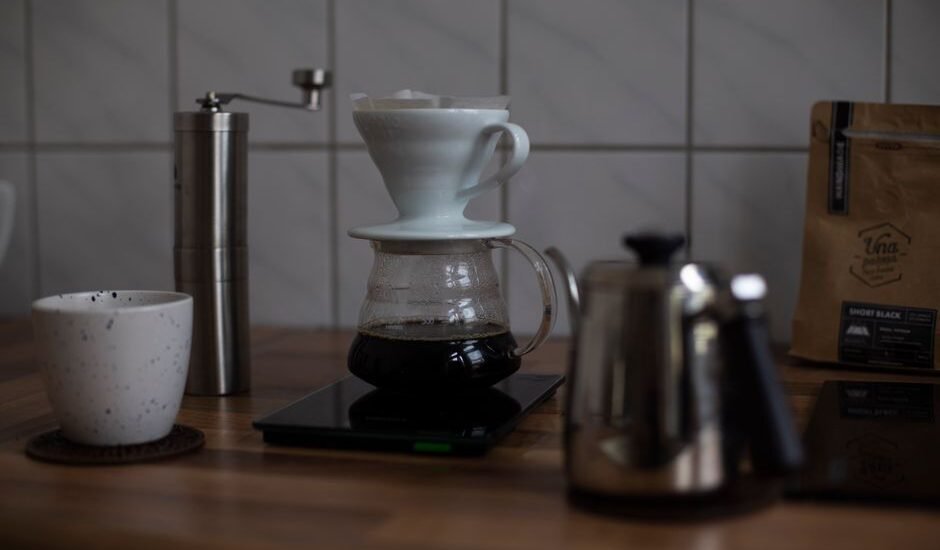
Grab a digital scale and a gooseneck kettle if you want precise pours. Weigh your coffee first—most home brewers use 15–25 grams for a single mug. Tare the scale with your brewer or mug on it, then add water up to your target ratio. For example, 20g of coffee at a 1:16 ratio means pouring to 320g of water. This takes the guesswork out of every cup.
If you’re brewing for a group, multiply your numbers. Four mugs at 20g each? That’s 80g coffee, 1280g water for a 1:16 ratio. You can view what’s available for affordable, beginner-friendly scales and kettles that make this process painless.
For methods like French press or cold brew, you can use a larger carafe and batch brew. Just stick to your ratio and make notes on what you like best. Over time, you’ll find the numbers that work for your taste and your gear.
FAQs: Ideal coffee to water ratio demystified
How much coffee should I use for 1 liter of water?
For a classic drip or pour-over brew at a 1:16 ratio, use 62–63 grams of coffee per liter of water. For a stronger French press, 70–83 grams per liter is typical. Always adjust to taste, but these numbers are a reliable starting point for most home gear.
Is it better to measure coffee by weight or by volume?
Weight is far more accurate. Coffee beans vary in density, roast, and grind, so one tablespoon can weigh much more or less depending on the batch. Measuring by grams ensures repeatable results—no more guessing if your “scoop” matches the recipe.
What’s the best ratio for cold brew concentrate?
A strong cold brew concentrate usually calls for a 1:4 to 1:8 coffee-to-water ratio. For example, 100g of coffee to 400g of water yields a potent concentrate you can dilute to taste. Let it steep for 12–24 hours in the fridge, then strain and store for up to a week.
French press vs. pour-over: which uses more coffee for the same strength?
French press recipes often use a higher coffee-to-water ratio (1:12 to 1:15) compared to pour-over (1:15 to 1:17) for a similar strength. The longer steep time and coarser grind in a French press require more grounds to extract balanced flavor.
What if my coffee still tastes weak or bitter, even with the right ratio?
Ratio is only one variable. Weak coffee can mean too coarse a grind, stale beans, or water that’s too cool. Bitterness might signal over-extraction or water that’s too hot. Try tweaking your grind size or water temperature before adjusting your ratio further.
Are there any common compatibility issues with home brewers and scales?
Some drip machines or pour-over stands have platforms too small for large scales or carafes. Check your brewer’s base dimensions and ensure your scale fits. Also, not all scales are water-resistant—look for one labeled as splash-proof if you brew directly onto the scale.on compact, coffee-friendly scales with high accuracy.
Final thoughts: Why your ideal ratio is personal
There’s no single “right” ratio for everyone. Start with the guides above, but don’t be afraid to experiment. A digital scale and a kettle with precise pouring control open up a world of consistency and flavor. Once you find your sweet spot, making great coffee at home gets easy—and a lot more enjoyable.
For deeper dives on coffee brewing science, check out resources like Serious Eats or explore the technical side of extraction and ratios via ResearchGate for peer-reviewed studies.
Last updated: June 2026 · How we cover this topic